Have you ever had an experience so sweet and tender that, years later, you can still recall every smell, every sparkle of light, every word that was said? The warmth, love, and peace of that moment feel so vivid that the memory itself seems to carry you through difficult days. That is what emotional charge does; it transforms an ordinary experience into a memory, an event engraved on the heart.
As humans, we are wired for, and by, emotions. That is how we relate, how we pass on knowledge, how we make meaning. And because of that, we tend to put extra value on anything that holds emotional weight. If it moves me, we think, surely it will move everyone else too.
This is often why we assume our cherished memories are stories in disguise, destined to be written down and shared with the world.
Maybe you have even had that thought yourself: This experience meant so much to me. Maybe I should write it down. Maybe this is a story the world needs to hear.
Some of us act on that impulse. We sit down, pour our hearts onto the page, include every detail we can recall, and submit it eagerly for publication, only to be surprised when the response is not what we expected.
Where is the story? asks the editor or publisher. You stare back, slightly offended. It is right there, you think, in the shimmering light, in the way it felt, in all the tiny details that made the moment magical.
But the truth is that sometimes we are so invested in the feeling of the memory that we cannot see the forest for the trees.
Many aspiring writers consider their memories to be rare gems, shiny and valuable, and easily converted into the most precious currency there is: stories. But seasoned writers know that just as not every shiny object is a gem, not every memory has the potential to become a story. Emotion alone is not enough. For a memory to become a story, it needs a continuum and relevance. It needs to tap into something bigger that expands it from a personal experience to a universal one.
And that all starts with understanding what a story actually is.
Memory vs. Story
A memory is defined as the ability to remember information, experiences, and people; something recalled from the past. A story, on the other hand, is a description, true or imagined, of a connected series of events.
So:
A memory says: “This happened, and I cherish it.”
A story says: “This happened, and because it happened, something changed.”
It is that change, emerging from the connections between events, that creates universality. It is what allows a reader who shares none of your life circumstances to still nod and think, I have felt that too.
A memory says “This happened and I cherish it.” A story says “This happened and something changed.”
A warm morning, a glass jar, a child’s giggle, making pancakes — these are lovely elements. But without movement, without a goal, without a shift from one state to another, they are snapshots. Beautiful, atmospheric snapshots, but not a story. Meaningful to the writer, yet not universal enough to be meaningful to the reader.
The Making of a Story
A good story must have a strong spine. It is built from a sequence of events that create movement and change. A true story will still stand even if you peel away the flowery descriptions, backstory, metaphors, and poetic lines. A good story can be summarized in a couple of sentences, clearly showing that something happened and something shifted.
Emotion can power a story, but it cannot replace structure.
At the centre of that movement is a protagonist, someone the reader can follow, root for, or at least understand. It can be a child, an adult, a dragon, a seed, or even a spoon, as long as it behaves like a character with desires, challenges, and choices. Readers connect with characters who want something, struggle to get it, and change along the way.
Most stories, from ancient legends to contemporary picture books, rely on six essential elements:
1. Inciting Incident
Something disrupts the ordinary world. A knock at the door. A lost toy. A strange noise. A sudden opportunity. In other words, something changes.
2. Progressive Complications
The protagonist tries to move forward but things get harder. Small obstacles grow into bigger ones. Progress is not smooth. Things get worse before they get better.
3. Turning Point
A moment arrives that forces the protagonist to see the situation differently or take a new action. The story can no longer continue the way it has.
4. Crisis Choice
The character must make a meaningful decision. There is no easy option. What now?
5. Climax
The character acts on that decision. This is the moment of greatest energy. Action meets consequence.
6. Resolution
The dust settles. We understand what the journey meant and how the protagonist has changed. Life is different now.
Even the simplest picture books follow this pattern. A character wants something. Something gets in the way. The character makes a choice. Life shifts. It does not need to be complicated; it simply needs movement.
Without this structure, writing may feel warm, nostalgic, or atmospheric, but it remains a memory. When these elements are present, the same material begins to take shape as a story.
These six elements form the heartbeat of narrative. When they are implemented with care, they lift a piece of writing from personal recollection into something universal that has the potential to resonate with others.
The Spark Test
At Enthusiasts of Life, we use the “Spark Test” to evaluate each manuscript and guest blog post before publication. Stories that pass the test contain an emotional charge that jumps from page to reader. They evoke empathy, curiosity, courage, or joy. And they are universal. They offer something beyond “this happened to me and it was meaningful.” They speak to all of us, not just those who lived it.
For a story to pass the Spark Test, it must:
• Be a story • Ignite enthusiasm • Promote authenticity • Connect with readers on a deeper level
While the last three may be subjective, the first criterion is straightforward. Does your story have the required building blocks described above? Can you see the character progression? Is the message universal? Can you summarize the plot in two sentences? Not the atmosphere. Not the memories. Not the descriptions. The plot.
If the answer is no, you may have a lovely memory, not a story yet.
Nurturing the Seed
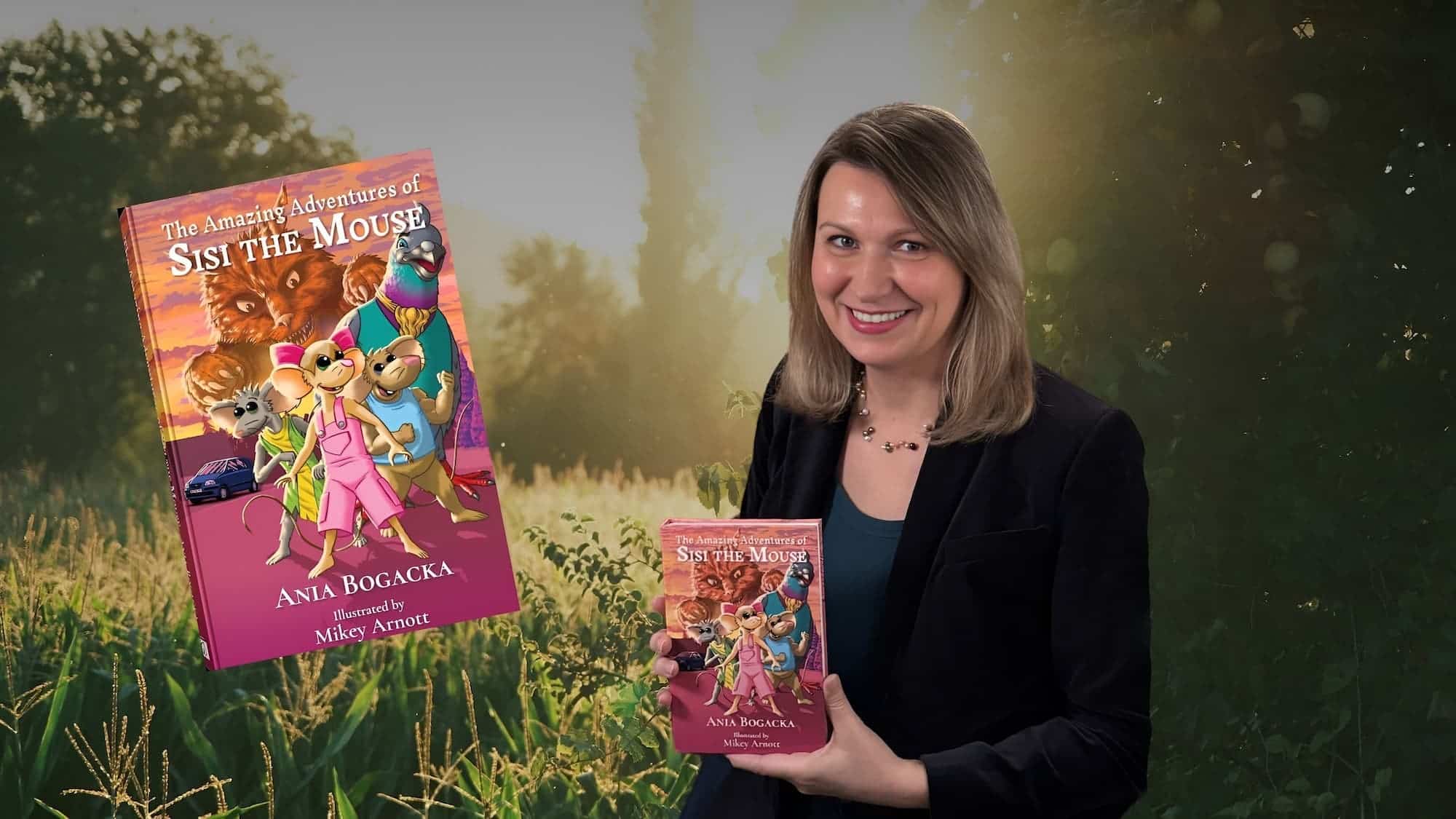
As a publisher and a writer, I have deep respect for people’s experiences and their memories. Memories can be seen as seeds, tiny snapshots of life that carry potential, tenderness, and meaning. With the right care, some seeds grow into something larger. But only when they are planted in fertile soil, nurtured, and shaped into a form that others can recognize and connect with.
An experienced gardener will tell you that not every seed will sprout, no matter the effort. And an experienced editor or publisher will echo the sentiment. Not every memory becomes a story, even when the writer is given thoughtful feedback, resources, and examples. Some seeds simply are not meant to grow into the kind of narrative that offers universality, the element that allows readers everywhere to see themselves in it.
Not every seed becomes a plant. Not every memory becomes a story.
If you find you cannot move from the uniqueness of your experience to something that expresses a shared human truth, it may be a sign that what you have is not a story yet, but a cherished memory that will always hold a special place in your heart.
And who knows — perhaps that memory, even if it never becomes a story on its own, will become the backdrop or emotional soil for a story you will tell later. Many of the best narratives start exactly that way.
So, what is your story?